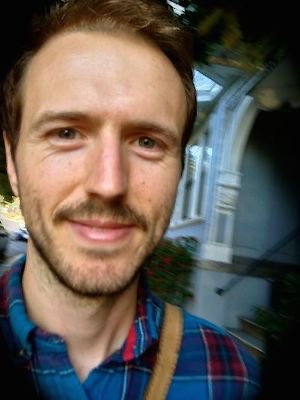
Photo: Lands End & Sutro Baths at golden hour · August 2025 · Isabelle Lee
About the Workshop
Interpretability research has produced a robust toolkit for understanding models — probing,
sparse dictionary learning, data attribution — but these tools are often applied only to models
at the end of training. How a model got there is studied separately: aggregate
relationships such as scaling laws and architecture-based performance estimation reliably
predict final losses, while studies of training dynamics document when representations and
behaviors emerge, over training steps and across scale.
The path a model takes through training shapes what it becomes, and a trajectory-level
understanding may let us trace how its behaviors emerge, anticipate failures and safety risks,
and intervene before they fully manifest. This workshop asks which interpretability
methods work for understanding training, and what actions they might enable that outcome-only
evaluation cannot.
That view is useful precisely because it surfaces phenomena final perplexity, accuracy, or
win-rates cannot. Models may perform well on downstream evaluations while becoming overtrained
and difficult to fine-tune afterward; if model flexibility could be quantified during
training, such failure modes could be anticipated before they manifest downstream. Recent work
on the interaction between fine-tuning and pretraining likewise suggests training dynamics can
predict when adaptation will succeed, degrade, or induce forgetting.
We welcome both theoretical and empirical work. By bringing together academic researchers and
practitioners, the workshop aims to move from understanding training to foresight and
intervention — organized around three escalating goals.
Three Escalating Goals
We welcome contributions across all three.
1. Descriptive
How representations and model internals evolve over training
Representation formation, phase transitions, reorganization, and interaction across training
Interpretability across time, scale, gradients, and optimization dynamics
Characterizing the impact of initializations and run-to-run variations
2. Predictive
Early signals that forecast later capabilities, failures, generalization, and structural shifts
Pretraining evaluations that predict post-training behavior
Generalization prediction: what transfers from which data, when, and why
Training outcome prediction, including negative results
3. Prescriptive
Controlling and repairing training — checkpoint-level interventions, data mixing and filtering, or steering learning directly with methods such as gradient routing and targeted regularization
Training repair, such as reverting to and correcting from earlier checkpoints
Phase-specific data selection strategies
Controlling model behavior during training
Call for Papers
We invite submissions of original work, position papers, and experience reports that advance
trajectory-level understanding of training dynamics. Negative results and replication studies
are explicitly welcome. We invite short (5-page) or long (9-page) papers; submissions will be
managed via OpenReview. Portal and template details will be posted here.
AI-generated papers are not allowed. AI-generated artifacts used as part of the work
(e.g., code, data, or experiments) are allowed, but must be disclosed. Papers must follow the
Policies on Large Language Model Usage at ICLR 2027, including the disclosure of LLM usage.
A full day of invited talks, contributed orals, two poster sessions, and a combined panel and interactive “debugging training” discussion. Subject to change.
09:00 – 09:10
Opening remarks
09:10 – 09:50
Invited talk 1
09:50 – 10:30
Invited talk 2
10:30 – 11:15
Poster session 1
11:15 – 11:55
Invited talk 3
11:55 – 12:45
Contributed orals
12:45 – 13:30
Lunch
13:30 – 14:10
Invited talk 4
14:10 – 14:50
Contributed orals
14:50 – 15:30
Poster session 2
15:30 – 16:00
Panel discussion
16:00 – 17:00
Interactive “Debugging Training” session
Debugging Training, live
The closing hour pairs a moderated panel on open challenges with a hands-on
“debugging training runs” clinic: participants bring real training
problems — instabilities, divergences, scaling pathologies — for the panelists and
audience to diagnose together. Turning trajectory-level insight into on-the-spot
fixes is exactly the kind of actionable training science this workshop is built around.
17:00 – 17:10
Closing remarks
Evening
After-social for organizers, speakers, program committee, and participants — organized by social chair Glenn Matlin (Georgia Tech)
Invited Speakers and Panelists
Below are the currently confirmed speakers and panelists; the division between talks and the panel is still being finalized.
Andrew Saxe
University College London
Confirmed
About
Professor at UCL, whose lab develops mathematical and experimental tools to understand how learning emerges in brains and artificial neural networks.
Gautam Reddy
Princeton University
Confirmed
About
Assistant professor at Princeton, whose lab develops physics-inspired theory and tools for understanding learning and decision-making in biological and artificial systems.
Kyle Lo
Microsoft AI
Confirmed
About
Member of technical staff at Microsoft AI, who previously co-led the OLMo project on open language modeling. His current research focuses on large-scale pretraining of language models, with an emphasis on data curation, data mixing, benchmark validity, efficient experimentation, and generalization across model scales.
Martin Ziqiao Ma
Thinking Machines Lab
Confirmed
About
Member of Technical Staff at Thinking Machines Lab. His current research focuses on continual learning with minimal and natural supervision, where the boundary between training and inference dissolves.
Stephanie Chan
Google DeepMind
Confirmed
About
Staff research scientist at Google DeepMind. Her work on science of AI focuses on understanding emergent behaviors and in-context learning, drawing on neuroscience. Her current research also examines the future impacts of AI.
We intend to invite an additional PhD student speaker; further additions will be announced as invitations are finalized.
Organizers
Isabelle Lee
University of Southern California
training, interpretability, reasoning
Full bio
Isabelle Lee is a PhD student at the University of Southern California. Her work focuses on interpretability, training, and reasoning. Specifically, her research aims to (1) predict training and (2) predict failures. To this aim, she uses dynamical systems and physics-inspired approaches to analyze small-scale toy learning problems, as well as analyzing larger-scale training from developmental perspectives. She is a recipient of the Viterbi School of Engineering Graduate Fellowship and Coefficient Giving's Technical AI Safety Research Grant. Previously, she was a researcher at Carnegie Mellon University and Amazon Alexa, and her background is in Plasma Physics and Complex Systems.
Emmy Liu
Carnegie Mellon University, LTI
pretraining, cognitive perspectives
Full bio
Emmy Liu is a PhD Candidate at Carnegie Mellon University in the Language Technologies Institute. Her current work is on understanding pretraining from a cognitive perspective. She is a recipient of a Natural Sciences and Engineering Research Council of Canada Doctoral Scholarship, the SoftBank-ARM fellowship, an NEC fellowship as well as a CMU Presidential Fellowship. Her work has received the Best Resource Paper award at ACL 2023. She has co-organized the workshop on Figurative Language Processing at NAACL 2024, the overall Student Research Workshop at NAACL 2025, as well as the Computational Developmental Linguistics workshop at ACL 2026.
Kaiser Sun
Johns Hopkins University
training dynamics, evaluation, interpretability
Full bio
Kaiser Sun is a Ph.D. student in Computer Science at the Data Science and AI Institute and the Center for Language and Speech Processing at Johns Hopkins University. Their research focuses on the training dynamics, evaluation, and interpretability of Large Language Models. Generally, Kaiser is interested in understanding how language models function and exploring how we can change them. Their work has been recognized with an honorable mention at CoNLL 2023, an outstanding paper award at MLRC 2022, and coverage by a few media outlets such as MIT Technology Review and WIRED. Previously, they obtained their B.S. and M.S. from the University of Washington and were a researcher at Meta AI, Together AI, and AWS AI Labs.
Daniel Khashabi
Johns Hopkins University
reasoning, discovery
Full bio
Daniel Khashabi is an Assistant Professor of Computer Science at Johns Hopkins University, affiliated with the Data Science and AI Institute and the Center for Language and Speech Processing (CLSP). He is interested in the intersection of reasoning and discovery. He is the recipient of the NSF CAREER award (2026), Ai2's Lasting Impact Award (2024), multiple industry faculty awards (Amazon, Google, Apple), and several Best Paper Awards (COLM 2024, ACL 2023, NAACL 2022). His teaching earned him the Joel Dean Award for Excellence in Teaching in the Department of Computer Science in 2025. Most relevant to this proposal, he has co-organized Towards Test-Time Continual Learning Agents at NeurIPS 2026, Interpreting Agent Behavior (IAB) at NeurIPS 2026, the Workshop on Instruction Tuning and Instruction Following at NeurIPS 2023, and the Student Research Workshop at ACL 2019.
Stella Biderman
Executive Director, EleutherAI
open LLMs, learning dynamics, interpretability, evaluation
Full bio
Stella Biderman is the Executive Director of EleutherAI, a non-profit research institute and open science community that does research on large language models, works to make research on large-scale AI technologies more widely accessible around the world, and works to grow and promote the open source AI community. She pioneered the development of open and transparent language models that make the type of research advocated for in this workshop possible, including the first state-of-the-open LLMs to be released alongside their training data and the Pythia model suite, which introduced the idea that releasing partially trained model checkpoints was scientifically valuable and set the standard for maximally open releases adopted by projects such as LLM360, OLMo, and Marin. Her lab has done influential research on learning dynamics and interpretability, including introducing Sparse Autoencoders as a tool for interpretability, introducing the problem of forecasting which specific sequences are memorized by a large language model during training, performing the first study of the stability of circuit analysis over the course of training, and demonstrating that it is possible to use data filtering to eliminate undesirable capabilities in large language models. Her recent position paper at ICML outlines the need for the type of work solicited in this workshop.
Stella co-leads the EvalEval Coalition, a multi-stakeholder initiative bringing methodological rigor and accountability to AI evaluation, is on the advisory board to the Machine Learning Reproducibility Challenge, is organizing an Open-Weight Pre-training Safety Accelerator as part of the Seoul Alignment Workshop (co-located with ICML), and is an AC for NeurIPS. Previously, she was an organizer of the AI Village @ DEF CON (2018–2021), working group lead for the BigScience Research Workshop (2022), and organizer of Dataset Convening. Stella received her M.S. in Computer Science from Georgia Tech, her S.B. (honors) in Mathematics from the University of Chicago, and her A.B. in Philosophy from the University of Chicago. Her work regularly appears at NeurIPS, ICML, ICLR, and ACL.
David Alvarez-Melis
Harvard University · Kempner Institute · Microsoft Research
data-centric ML, optimal transport
Full bio
David Alvarez-Melis is an Assistant Professor of Computer Science at Harvard University, where he leads the Data-Centric Machine Learning (DCML) Lab. He is also Associate Faculty at the Kempner Institute and a Research Scientist at Microsoft Research. The Harvard DCML Lab develops principled methods for characterizing, transforming, and optimizing datasets, working toward a rigorous science of data for machine learning. He has organized or co-organized several workshops at the intersection of machine learning and applied mathematics, including the Optimal Transport and Machine Learning Workshop at NeurIPS 2023, the Optimal Transport Workshop at the Institut d'Études Scientifiques de Cargèse (2024), and the LatinX in AI Workshop at ICML (2023 and 2024). David received his PhD in Computer Science from MIT, his MS in Mathematics from NYU's Courant Institute, and his BSc in Mathematics from ITAM in Mexico City. His work appears regularly at NeurIPS, ICML, ICLR, AISTATS, and UAI.